Saturn — The Ringed Planet
Saturn is the most beautiful planet in the solar system. It wears wide, shining rings like a giant belt. No other planet has rings as big and bright as Saturn's. When you see Saturn, you will never forget it!
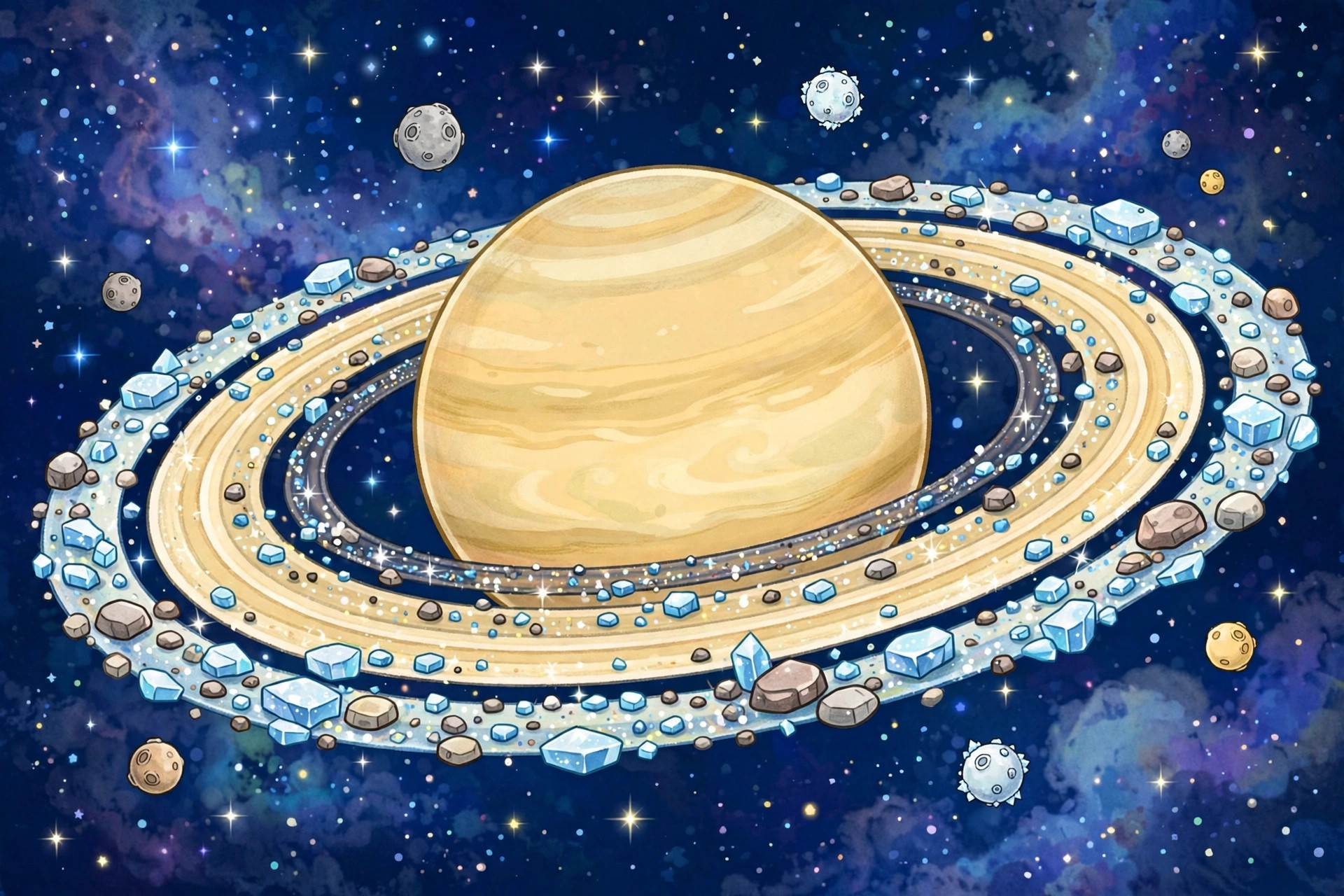
A Giant with Rings
Saturn is a gas giant, just like its big neighbour Jupiter. It is made mostly of gas, not rock. Its diameter is 120,536 kilometres. That makes Saturn the second biggest planet in the solar system, after Jupiter.
Saturn's rings are its most famous feature. The rings are wide and flat. They stretch far out from the planet. From far away, the rings look like one smooth, shining band around Saturn.
Saturn sits far from the Sun. It is 1,432 million kilometres away. That is about 9.6 times farther from the Sun than Earth is. Sunlight is weak out there, and Saturn is very cold.
The Planet That Would Float
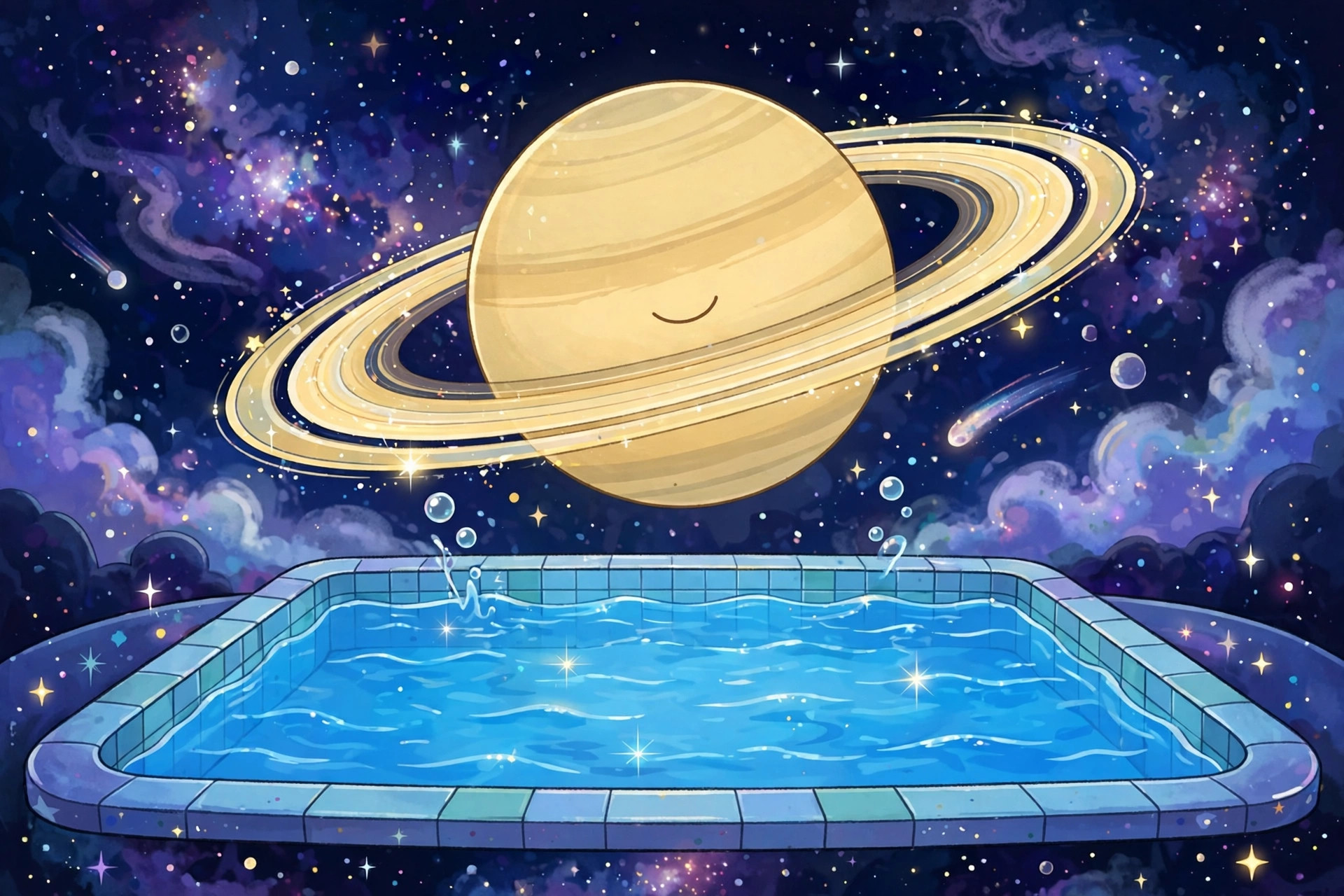
Here is Saturn's coolest trick. Saturn is very light for its size. Its density is less than the density of water. That means if you could find a bathtub big enough, Saturn would float on the water like a rubber duck!
Think about that. Saturn is a giant planet, almost ten times wider than Earth. Yet it would float. No other planet in our solar system can do that. Saturn is the only planet lighter than water.
A Very Long Year
Saturn spins fast, like Jupiter. One day on Saturn — one full spin — takes only 10.7 hours. So a day on Saturn is shorter than a day on Earth.
But Saturn's year is very long. Saturn takes 29.4 Earth years to travel once around the Sun. That means a kid who is 12 years old on Earth has not even had half a birthday on Saturn yet! Saturn moves slowly because it is so far from the Sun.
Saturn's Huge Moon Family
Saturn has more moons than any other planet. As of June 2026, scientists have confirmed 293 moons around Saturn. That is a huge family! New moons are still being found, so the number may grow even bigger.
Saturn's moons come in all sizes. Some are big and round. Some are tiny, like space rocks. Scientists keep finding new ones, so the moon count keeps growing. That is why we always put a date next to the number.
The average temperature on Saturn is minus 140 degrees Celsius. That is far, far colder than the coldest place on Earth. Saturn is a cold, windy world of gas and rings.
| Fact | Saturn |
|---|---|
| Diameter | 120,536 km — the second biggest planet |
| Distance from the Sun | 1,432 million km (9.57 AU) |
| Length of day (one spin) | 10.7 hours |
| Length of year (one orbit) | 10,747 days (29.4 Earth years) |
| Moons | 293 (as of June 2026) — more than any other planet |
| Average temperature | −140 °C |
| Special trick | Less dense than water — it would float! |
Watch and Learn
Want to see Saturn and its gas-giant friends up close? Watch these two videos. The first one takes you on a tour of the gas giants. The second one shows you the whole solar system.
Watch: Explore the Solar System: The Gas Giants (SciShow Kids)
Watch: Solar System 101 (National Geographic)
