Mercury — The Speedy Little Planet
Mercury is the closest planet to the Sun, the smallest planet in our solar system, and the fastest planet of all. It zooms around the Sun in just 88 days — while Earth takes a whole year!
Meet Mercury, the Speedy Little Planet
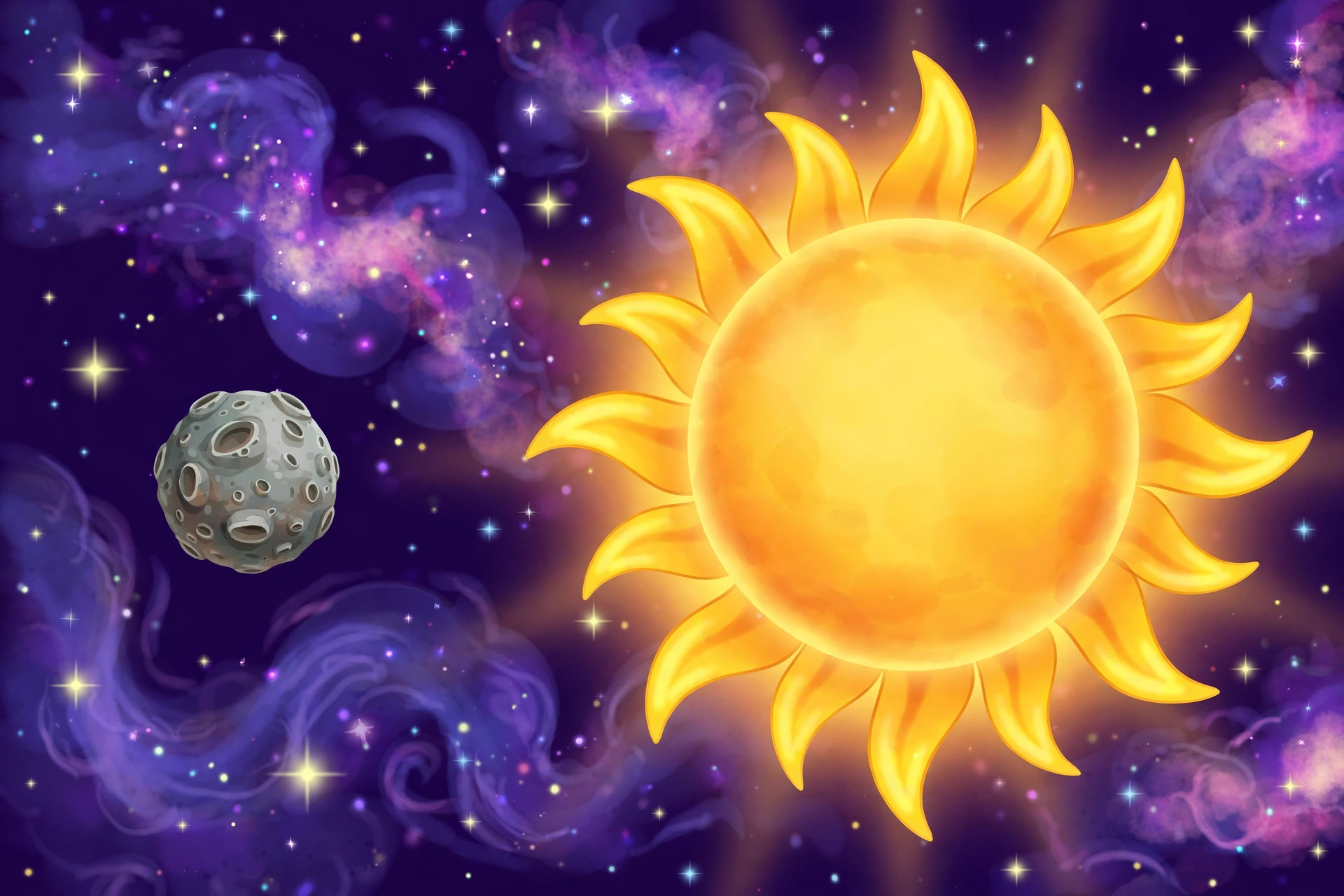
Mercury is the first planet from the Sun. It is only 57.9 million kilometres away from the Sun. That sounds far, but in space it is very close! The Sun looks huge and bright from Mercury.
Mercury is tiny. It is just 4,879 kilometres wide. That makes it the smallest planet in our solar system. Earth is more than two and a half times wider than Mercury. If Mercury were a marble, Earth would be a big bouncy ball next to it.
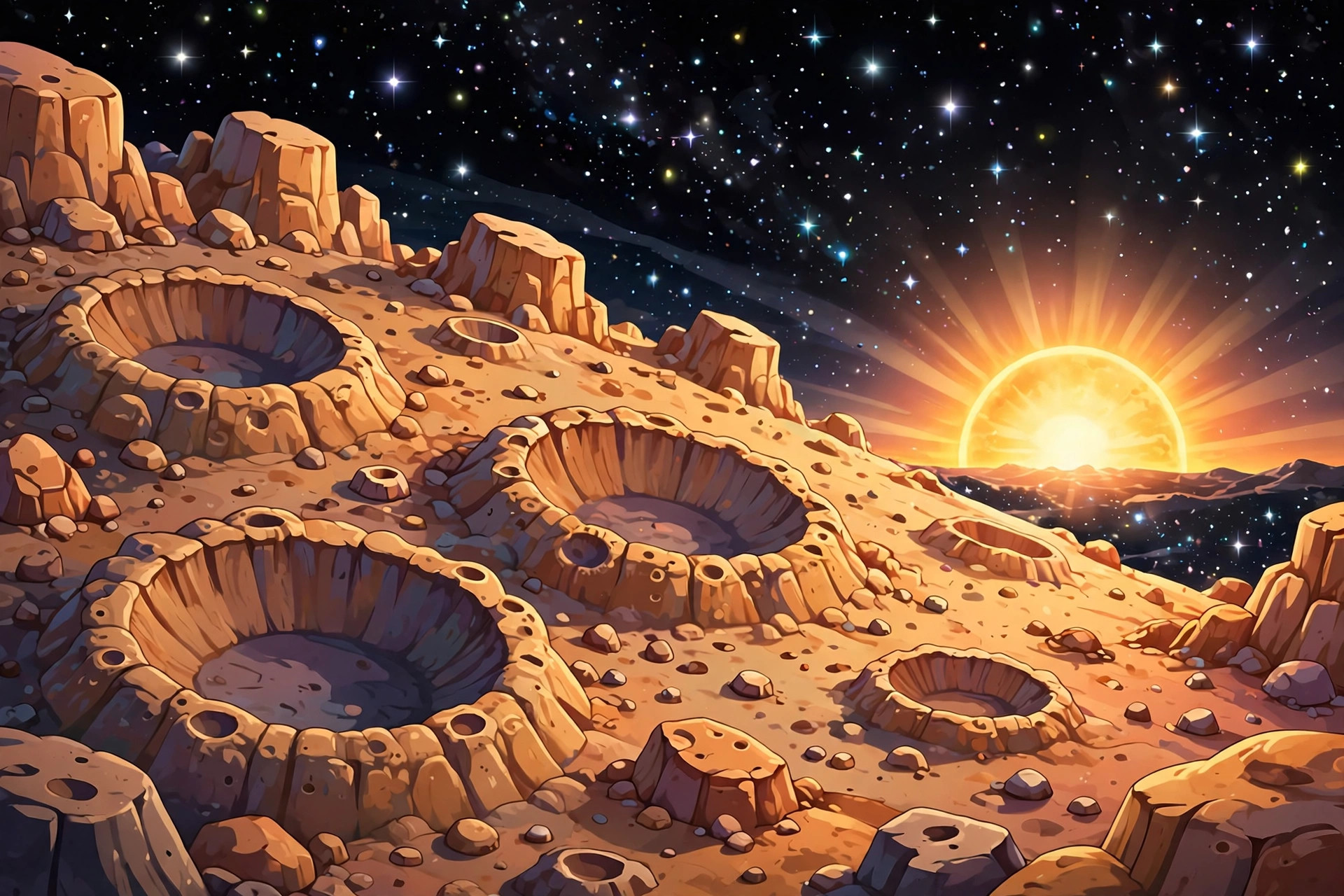
Mercury looks a lot like our Moon. Its surface is grey and rocky, and it is covered in craters. Craters are big round holes made when space rocks crash into a planet. Mercury has almost no air around it to protect it, so the rocks hit the ground and leave their mark. Some of Mercury's craters are very, very old.
A Year in Just 88 Days
Mercury is the fastest planet in the solar system. It races around the Sun at high speed, and one full trip — one year on Mercury — takes only 88 Earth days. That means that while you have one birthday on Earth, a kid living on Mercury would have four birthdays!
But Mercury is slow at spinning. One spin takes 59 Earth days. That is very strange: Mercury's year is shorter than the time it takes to spin around once! Because it spins so slowly and moves so fast, a full day on Mercury — from one sunrise to the next sunrise — lasts 176 Earth days. Imagine waiting almost half a year for the Sun to come up again!
Scientists have watched Mercury for a long time, and they know it has no moons at all. As of 2026, scientists have confirmed 0 moons for Mercury. It travels around the Sun all by itself.
Hot, Cold, Hot, Cold!
Mercury has the wildest temperatures of any planet. In the daytime, when the Sun is shining on it, the ground can heat up to 430 °C. That is hot enough to melt some metals! But at night, with no Sun and almost no air to hold the heat, the temperature drops to −180 °C. That is colder than the coldest place on Earth.
So Mercury is a planet of extremes. One side is burning hot, and the other side is freezing cold. The average temperature — the mean temperature — is 167 °C, but that number hides the huge swing between day and night. If you ever visited Mercury, you would need a super suit to keep you safe from both the heat and the cold.
Here is a surprise: Mercury is not the hottest planet, even though it is closest to the Sun. That prize goes to Venus. You can find out why on the Venus page!
Mercury in Numbers
| How wide is it? | 4,879 km across — the smallest planet |
|---|---|
| How far from the Sun? | 57.9 million km (0.39 AU) |
| How long is a year? | 88 Earth days |
| How long is one spin? | 59 Earth days |
| How long is a full day? | 176 Earth days, from sunrise to sunrise |
| How many moons? | 0 moons, as of 2026 |
| Average temperature | 167 °C |
| Hottest day temperature | 430 °C in daylight |
| Coldest night temperature | −180 °C at night |
What Would It Be Like to Stand on Mercury?
Standing on Mercury would feel very strange. The ground under your feet would be grey, rocky dust, full of craters big and small. The sky would be black, even in the daytime, because Mercury has almost no air to make the sky blue. The Sun would look huge and very bright.
You could not breathe there, because there is almost no air at all. And you would have to be careful where you stand! On the sunny side, the ground is hot enough to burn. On the dark side, it is so cold that everything freezes. Only a few places near the poles stay in a kind of in-between zone.
Scientists study Mercury's craters and plains to learn how this tiny, speedy planet formed.
Watch and Learn About Mercury
Want to see Mercury and its rocky planet neighbours in action? These two videos are a great place to start.
Watch: Explore the Solar System: The Rocky Planets (SciShow Kids)
Watch: Solar System 101 (National Geographic)
